The rule
Fill a row.
Hit its number.
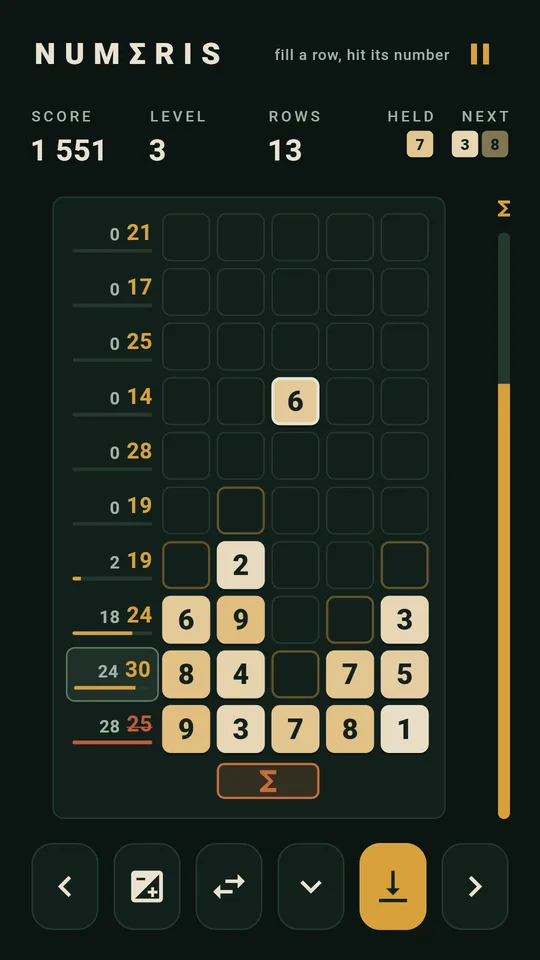
A falling-block puzzle made of numbers. No shapes and no rotation: one digit falls at a time, and a row clears only when it is full and its digits add up to the number beside it.
How it plays
Five wide, ten tall
Digits from 1 to 9 fall one at a time. Every row shows its target, between 10 and 30, with a meter that fills as its digits add up. The next two digits are always on show, so every drop is a decision rather than a guess.
A full row with the wrong sum just sits there. The stack grows, and the run ends when a new digit has nowhere to start.
Flip the sign
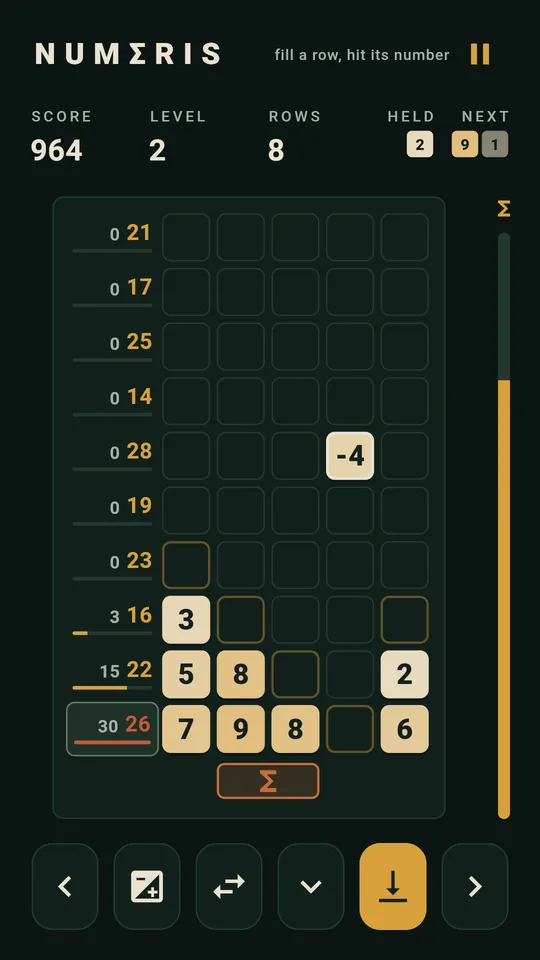
A falling digit can be turned negative before it lands, so a row that has overshot its target can still be pulled back down onto it.
Hold one back
Park a digit in the hold slot and take it back later. A 7 that arrives three rows too early can be kept instead of wasted, once per landing.
Cascades
Targets belong to the line, not to the row. When a row clears, the rows above fall and take on new numbers, and a row that was full and wrong can land on one it happens to match. Each pass of a cascade pays more than the last.
The fold
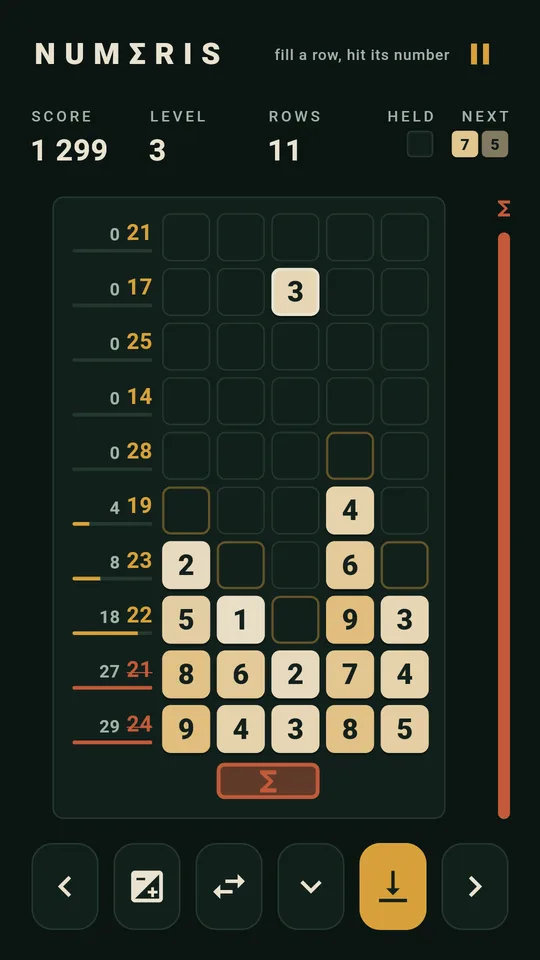
Score charges the Σ. Spend it and two columns of your choice are added together row by row, and everything beyond them slides over to free a column. The sums stay the same: the fold buys space, not a better total. When and where it happens is up to you.
The ranking
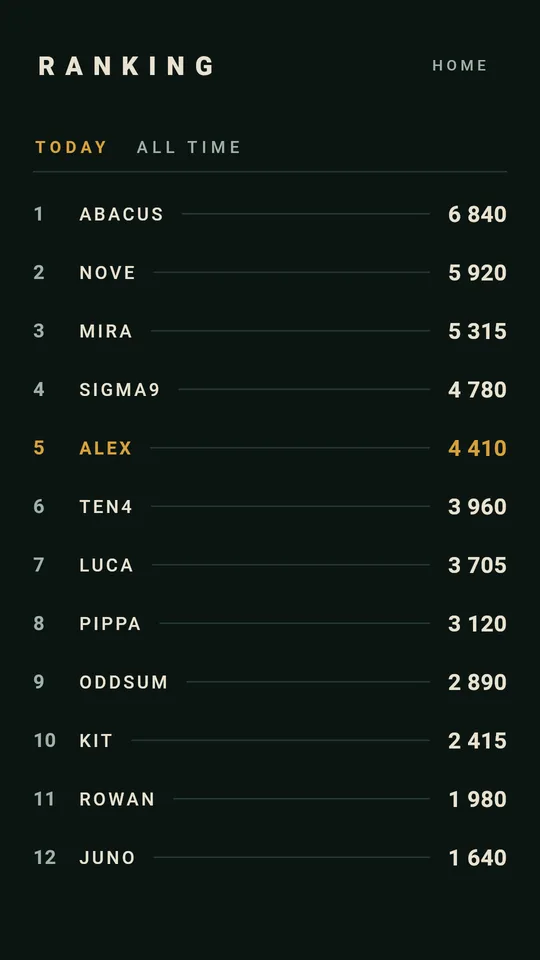
Put a finished run on the board for today or all time, under any name you like. There is no account and no sign-in, and a seven-lesson tutorial on the real board teaches the rest.
Flip the sign
Aim the fold
Make the board
Five digits. One number. How long can you keep up?